Creating videos has never been easier. At least that's what most AI video platforms promise.
Type a prompt, click generate, and watch artificial intelligence create a video in seconds. The demos look impressive. The marketing videos look effortless. The results seem almost magical.
But once you try creating videos consistently—whether for YouTube, marketing campaigns, online courses, social media, or client work—you quickly discover a problem.
Generating a video clip is easy.
Creating a complete video is not.
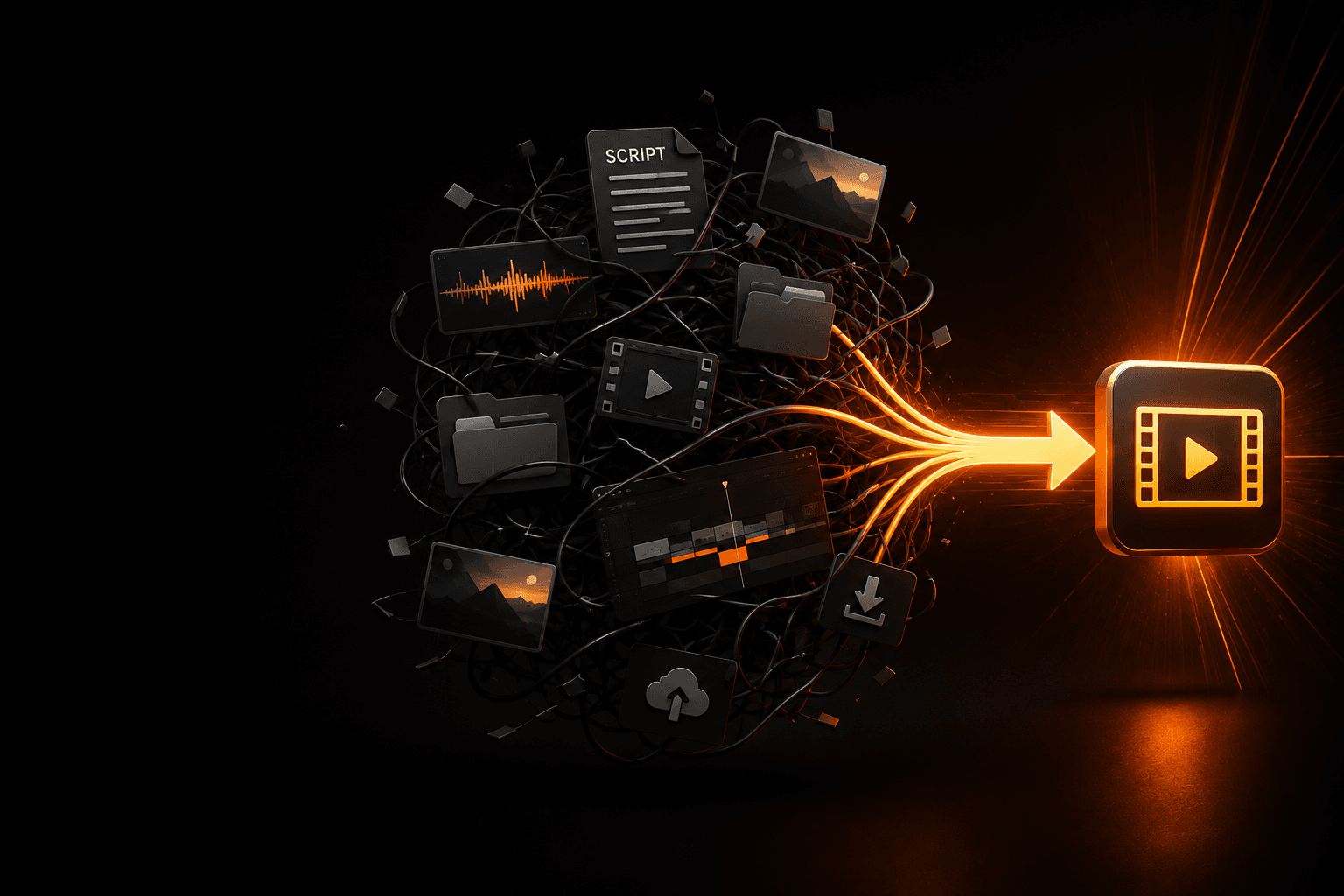
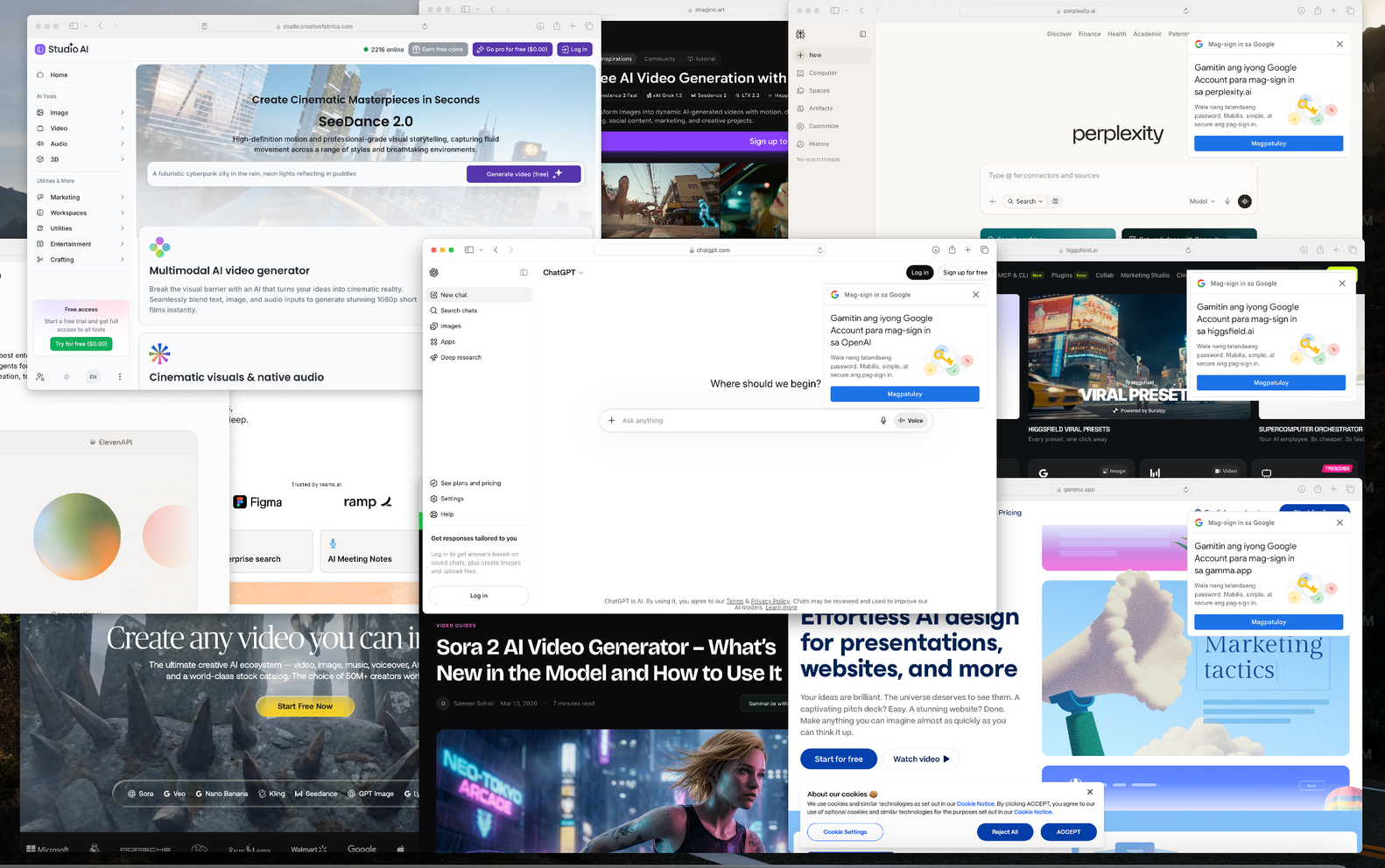
Most creators spend more time managing their workflow than actually creating content. Scripts are written in one tool. Voiceovers are generated in another. Images come from a different platform. Video clips are rendered elsewhere. Then everything gets assembled in a traditional editor.
Instead of making video creation simpler, AI often creates a new challenge: juggling multiple applications just to finish a single project.
This is exactly the problem that platforms like Vimerse Studio are trying to solve through a workflow-first approach rather than focusing solely on generating individual clips.
The Hidden Reality of AI Video Creation
Many people imagine AI video creation as a one-click process.
The reality is much different.
A typical 8–10 minute video can easily require over 100 individual shots. Every scene needs visuals, narration, timing, transitions, and consistency. When using separate tools, creators often spend hours moving files back and forth between platforms.
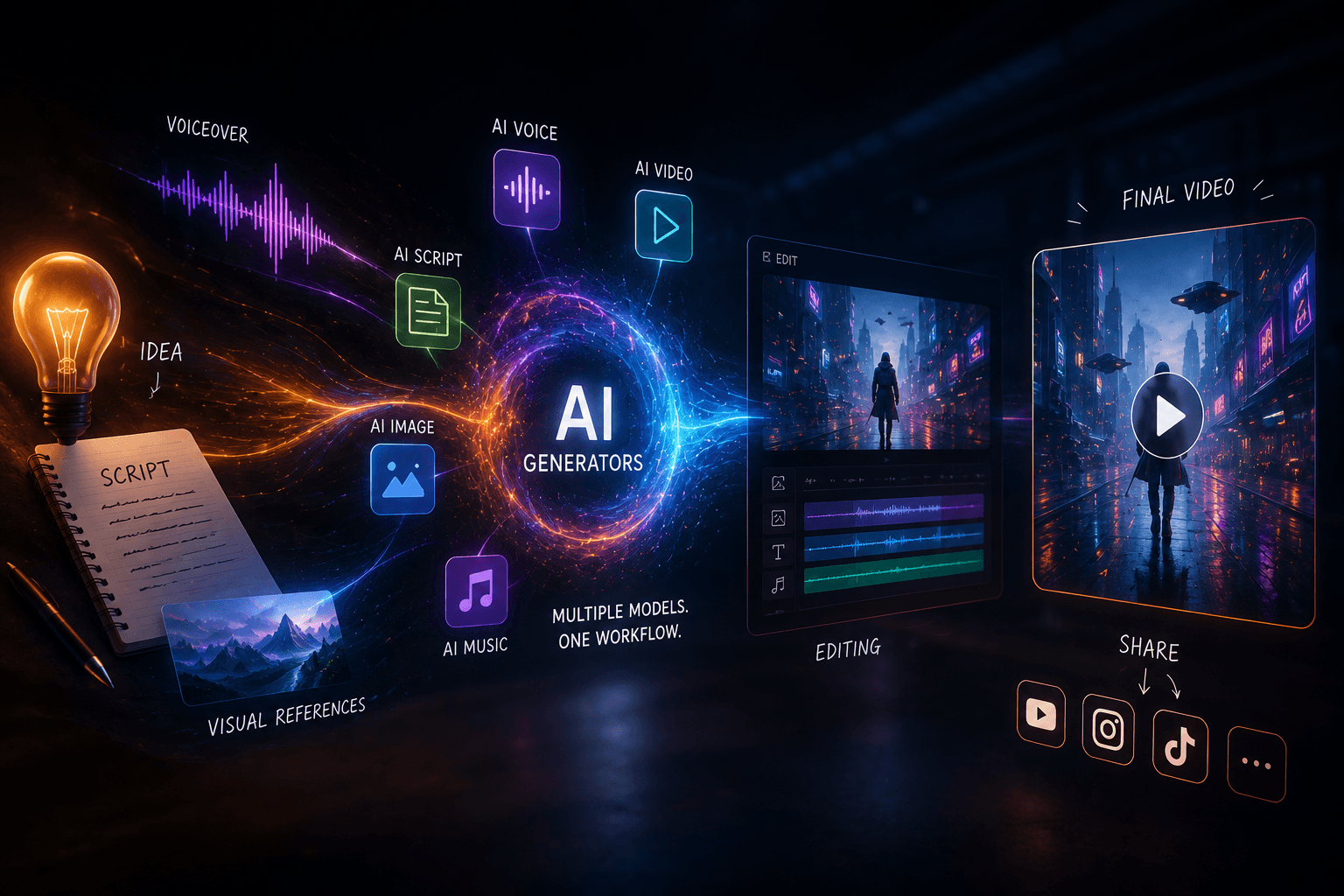
What starts as a simple idea can quickly become a complicated production pipeline:
- Write a script
- Generate voiceovers
- Create visual assets
- Generate video clips
- Sync audio and visuals
- Assemble everything in an editor
- Export the final video
The process works, but it is fragmented.
For creators publishing frequently, that fragmentation becomes one of the biggest bottlenecks.
Why Workflow Matters More Than Individual AI Models
The AI industry often focuses on which model is best.
Is one video model better than another?
Which image generator produces the most realistic results?
Which voice platform sounds the most natural?
Those questions matter, but they miss a bigger issue.
The best AI model in the world cannot fix a broken workflow.
A creator generating hundreds of scenes still needs a system that connects everything together. The challenge isn't simply producing a clip. The challenge is producing an entire video efficiently while maintaining quality and consistency.
This is where workflow-centric platforms have started attracting attention. Rather than replacing every AI model, they aim to organize the production process from script to export.
What Makes Vimerse Studio Different?
Unlike many AI video tools that focus primarily on generating clips, Vimerse Studio is designed around the entire production pipeline. According to its workflow documentation, each stage feeds directly into the next. Scripts drive voiceovers, voiceovers determine scene timing, and timing guides visual generation.
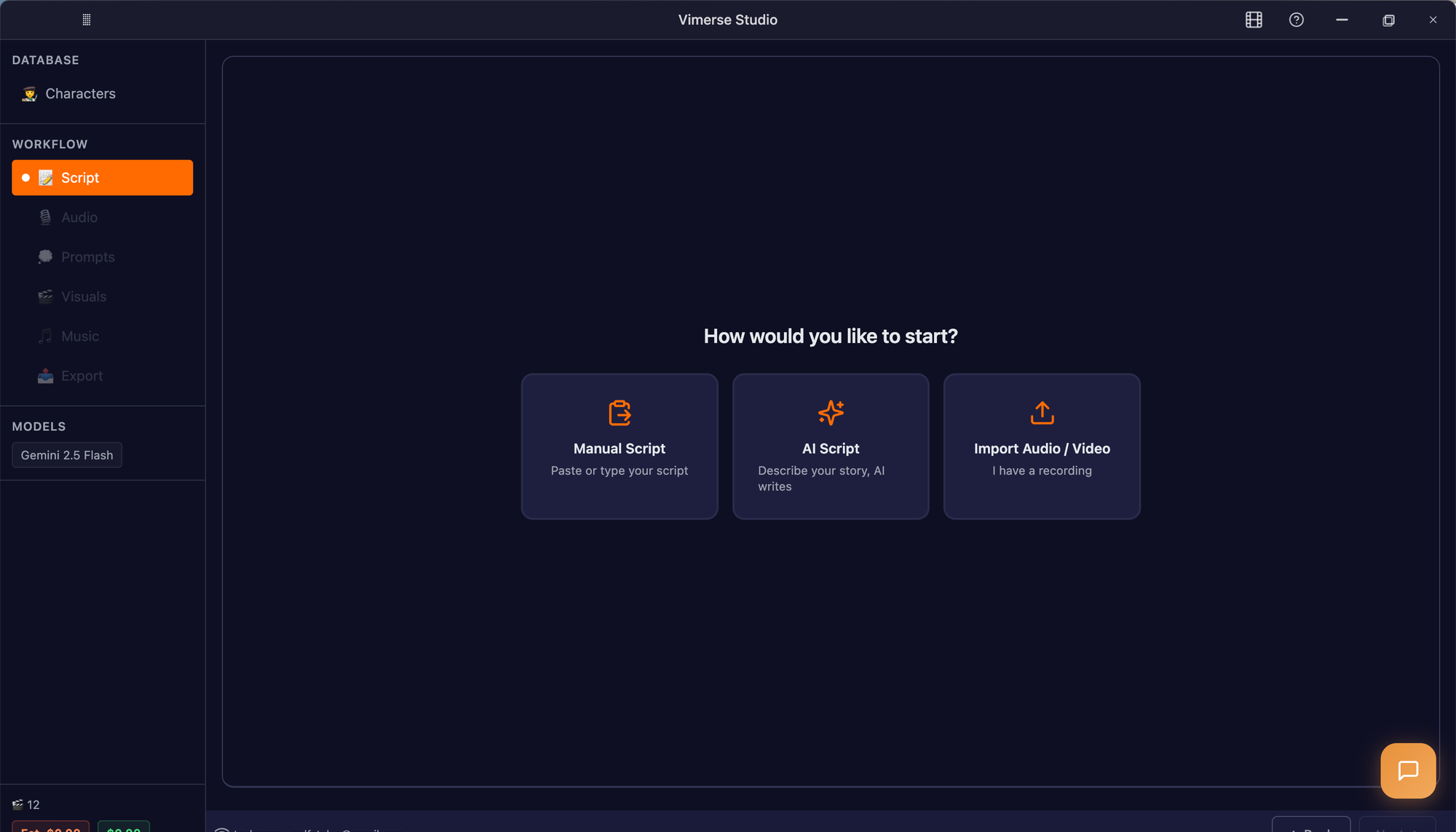
The workflow typically follows three major stages:
Script Creation
Creators can write scripts manually, generate them with AI, or import existing audio content for transcription and segmentation. The platform automatically organizes content into scenes.
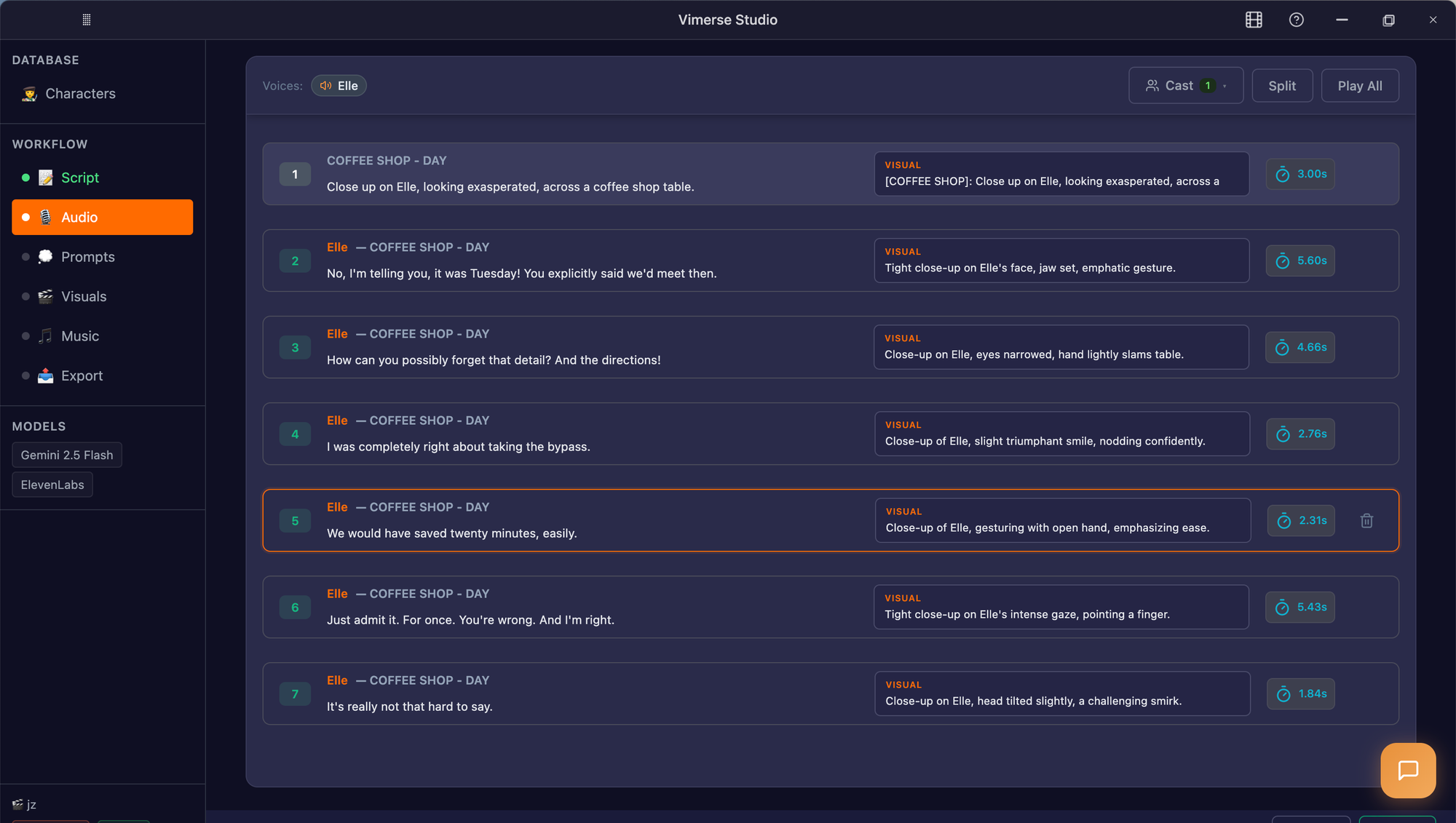
Voice Generation
Each character can receive its own voice. Narration is generated before visual production begins, helping establish precise timing for every scene.
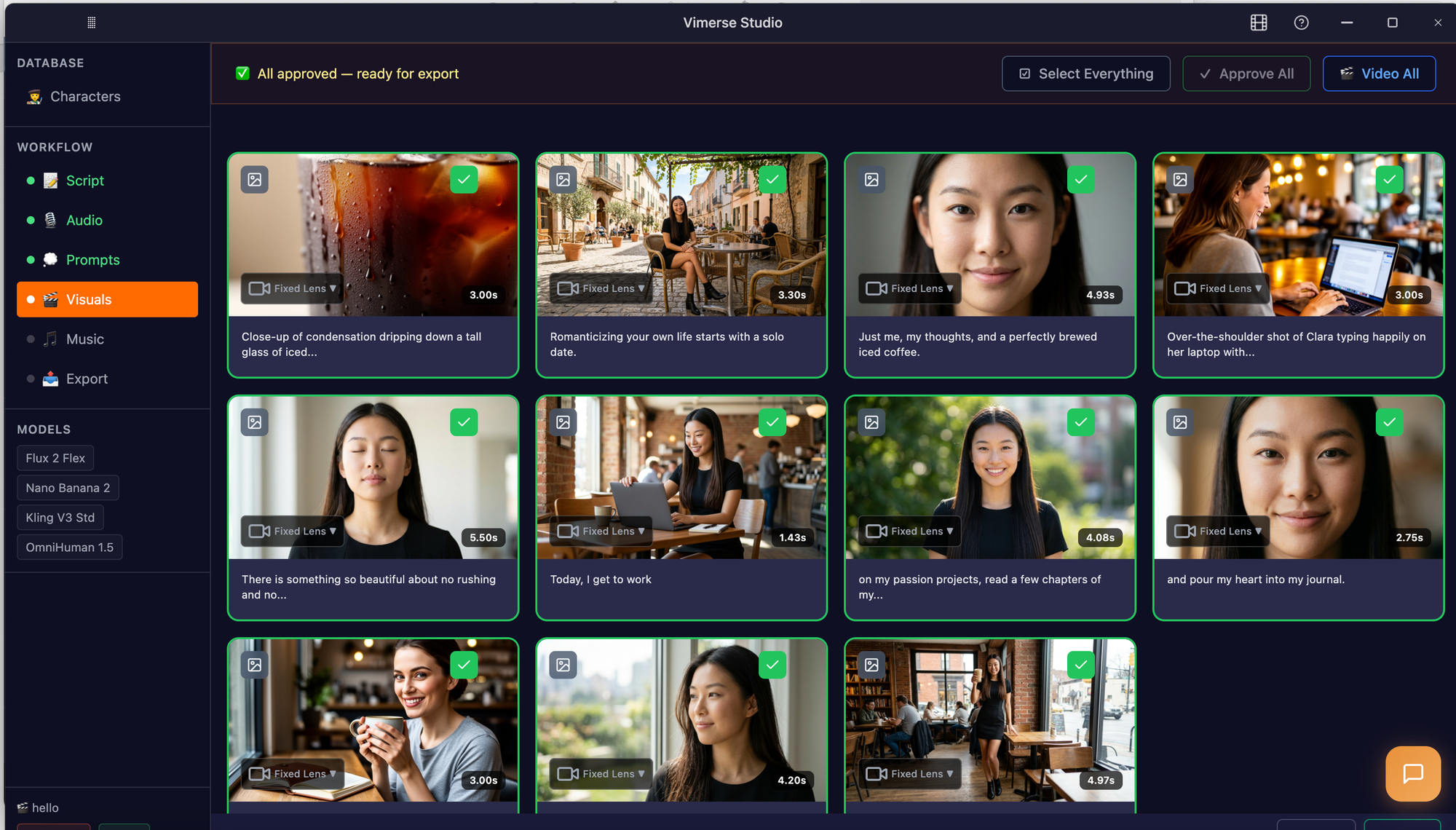
Visual Production
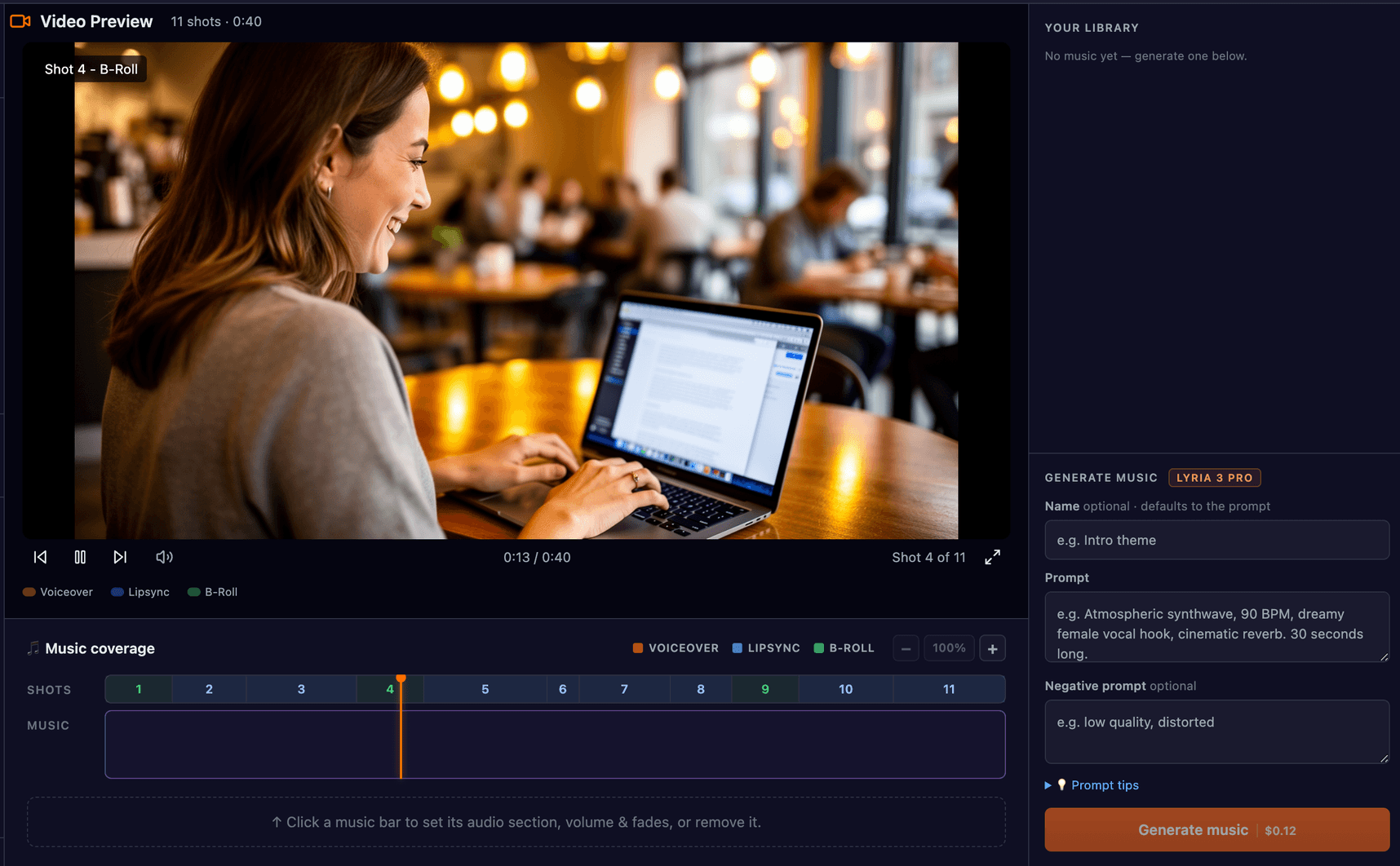
The platform generates prompts for scenes and allows creators to produce large batches of visuals rather than creating each shot manually one at a time.
This workflow-first design attempts to eliminate much of the repetitive work traditionally required when using multiple standalone AI tools.
The Importance of Character Consistency
One of the most common frustrations in AI video creation is inconsistency.
A character might look perfect in one scene and completely different in the next. Clothing changes unexpectedly. Facial features shift. Background styles vary.
For short clips this may not matter.
For longer storytelling videos, explainers, educational content, or branded productions, consistency becomes critical.
Creators increasingly expect AI tools to help maintain visual continuity across dozens—or even hundreds—of scenes.
Community discussions around AI video production frequently highlight consistency and workflow management as major concerns for serious creators.
Why More Creators Are Moving Toward End-to-End Systems
As AI video generation becomes more powerful, creators are beginning to evaluate platforms differently.
The question is no longer:
"Can this tool generate a good video clip?"
Instead, it is becoming:
"Can this tool help me finish an entire project faster?"
That shift is significant.
Professional creators, marketers, educators, and agencies often care more about production efficiency than isolated features. Saving several hours on every project can have a greater impact than slightly improving the quality of a single shot.
This is why workflow-oriented platforms continue gaining interest. They focus on reducing friction throughout the entire creation process rather than optimizing only one step.
The Future of AI Video Creation
The next evolution of AI video creation may not be about better generation models alone.
It may be about integration.
The tools that succeed will likely be those that connect scripting, voice generation, scene creation, character consistency, editing, and exporting into a seamless experience.
Creators do not just need powerful AI.
They need a system that helps them turn ideas into finished videos without fighting their workflow every step of the way.
Platforms such as Vimerse Studio represent one approach to solving that challenge by focusing on the entire production process rather than a single generation feature. Whether that becomes the industry standard remains to be seen, but the demand for streamlined workflows is clearly growing.
Try Vimerse Studio free: https://vimerse.app